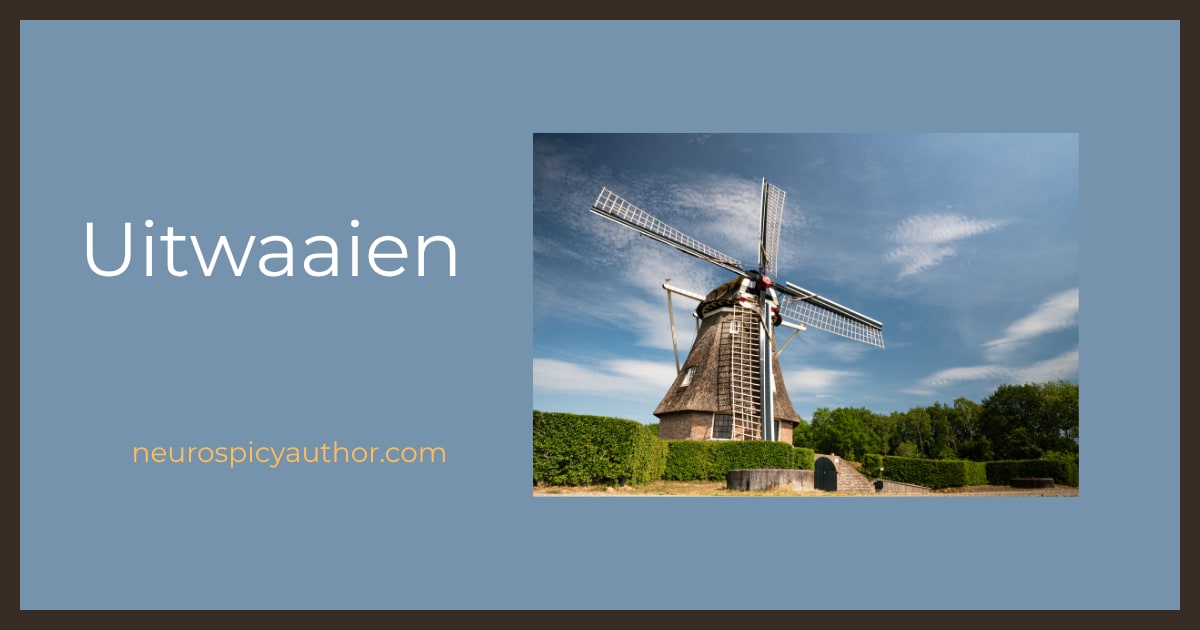
The Dutch word for going out into the wind to clear your head. Not a walk exactly. A deliberate exposure to open air and weather as a way of emptying a mind that has become too full.
I have approximately seventy tabs open right now.
Not on my browser. In my head. (ok, in my browser too)
Some of them are things I need to do today. Some are things I said I would do last week. Some are conversations I'm still processing from three days ago. Some are ideas I don't want to lose, half-formed things that aren't ready yet but can't be closed without disappearing. Some I genuinely can't remember opening. They're just there, running in the background, consuming resources, slowing everything down.
This is not a productivity problem. It is a nervous system problem. And the Dutch, who have a long tradition of practical wisdom about weather and the outdoors, figured out the solution long before anyone invented a system for managing it.
Go outside. Find some wind. Let it move through you.
They call it uitwaaien.
What it actually means
Uitwaaien is not a casual stroll. It is not exercise, not errands, not a change of scenery while your brain keeps running the same loops.
It is a deliberate going-out into open air for the specific purpose of being blown through. The wind is not incidental. The exposure to something larger and more chaotic than your own thoughts is the point. You are not trying to think more clearly. You are temporarily surrendering the thinking to something that doesn't think at all.
The Dutch live with wind the way Houston lives with heat. It is a constant, a given, a thing you either fight or learn to use. Uitwaaien is the practice of using it. Of taking what is already moving and letting it do the work your overthinking cannot.
Why stillness doesn't always work
The standard advice for an overwhelmed mind is to be still. Sit quietly. Breathe. Meditate. Wait for the noise to settle.
For some nervous systems, this works. For a neurodivergent nervous system that is already running seventy tabs, stillness can feel like asking a spinning top to stop by leaving it alone. The tabs don't close. They get louder. The quiet makes them more audible, not less.
What works instead is sometimes the opposite: movement, air, exposure to something external that is bigger than the internal noise. Not to escape the thoughts but to put them in proportion. The wind doesn't care about your to-do list. The open sky has no opinion about the conversation you're still processing from Tuesday. Standing in both of those things, even for ten minutes, does something that sitting quietly cannot.
It reminds your nervous system that it is inside a body, and the body is inside a world, and the world is very large and mostly indifferent, and that is, surprisingly, a relief.
What the wind does
You come back different. Not solved. Not emptied of every tab. But something has shifted in the arrangement.
The urgent things feel slightly less urgent. The looping thoughts have lost a little momentum. The things you couldn't see past an hour ago have moved slightly to the side, enough to see around them. The body has remembered it is not just a container for an anxious mind. It is a thing that can stand in wind and feel it and still be standing when the gust passes.
This is what uitwaaien gives you. Not clarity exactly. Proportion. The kind that only comes from briefly being part of something that has no interest in your problems and is moving anyway.
The practice
It doesn't require weather. It doesn't require coast or countryside. A parking lot in wind will do. A rooftop. An open window if that's all you have, though outside is better, and moving is better than standing still.
Leave the phone. Leave the list. Leave the intention to solve anything. Go out into whatever air is available and let it be larger than you for a little while.
Come back when you're ready. The tabs will still be there.
But somehow there will be fewer of them.
Go find some wind.
-- Ptim
Ptim Pellerin is a neurodivergent author, composer, and optical scientist based in Houston. His work explores the intersection of science, art, and neurodivergent experience.